Golden Brick VAT changes: What developers and registered providers need to know
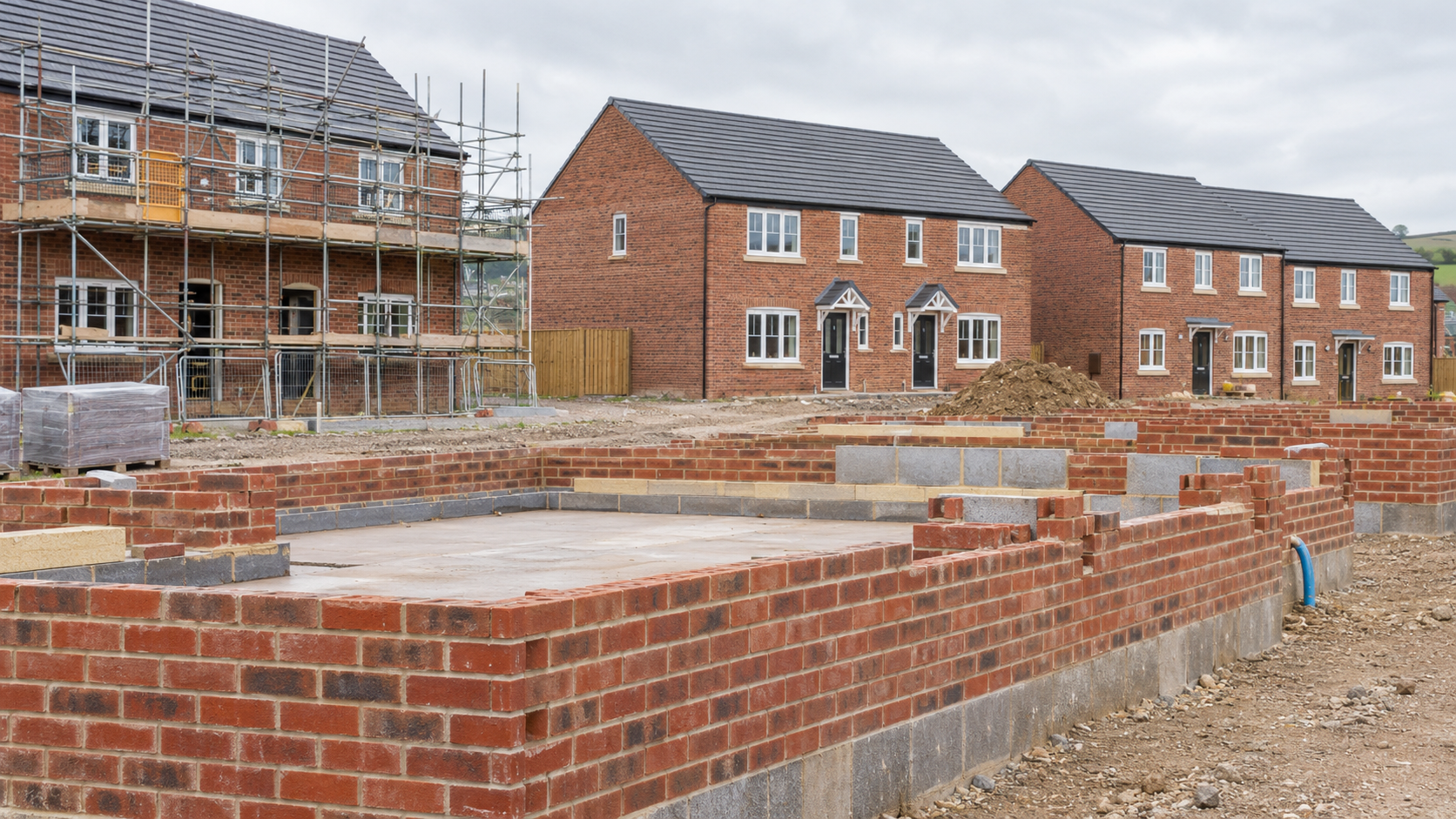
For years, selling land to a Registered Provider (RP) has relied on a VAT workaround: the "Golden Brick". A sale of bare land is exempt from VAT unless the seller has opted to tax, in which case VAT is charged at 20%. If the seller has opted, the RP pays VAT it generally cannot recover; if the sale is exempt, the seller's own input VAT recovery is restricted. Developers therefore build above foundation level before completion, so that the sale is zero-rated as a partly built dwelling. The result is delayed transfers, complex contracts, higher finance costs and build decisions driven by tax rather than practicality.
What is changing for land sales to registered providers?
After a consultation that ran from June to August 2026 and drew 97 responses, the Budget on 28 October 2026 confirmed that sales of land to RPs will be zero-rated across the UK from 1 April 2027. The relief will use the existing VAT definition of "relevant housing association", covering bodies registered with the social housing regulator in each UK nation. It will depend on who buys the land, not on its use.
Importantly, this is a zero rate, not an exemption, so the developer keeps its right to recover input VAT on its related costs. That avoids today's dilemma, where an exempt sale protects the RP but restricts the developer's recovery. The Golden Brick is not abolished, but for many straightforward deals it should no longer be needed.
When will the new VAT rules take effect?
The change will be made by secondary legislation in early 2027, with HMRC guidance expected before 1 April 2027. It does not apply to transactions completing now, and the detail will depend on the final legislation.
Points still to be settled
The proposal is not entirely consistent. It describes a test based on the buyer's status as an RP, but also refers to an RP making a qualifying declaration and to consequences if "the intended qualifying use is not achieved". HMRC has indicated that some form of certification will be required, placing responsibility for the VAT treatment on the RP. Clarification is needed on:
• Mixed-tenure schemes, apportionment and phased transfers;
• joint ventures, development subsidiaries and some Section 106 arrangements;
• local authorities, which appear to qualify where they are themselves registered providers, subject to the legislation; and
• contracts exchanged, or deposits paid, before 1 April 2027 where completion falls after that date.
Impact on transactions and structures
The real value of the change lies in how deals are structured: which entity acquires, when completion and the tax point fall, and how the land sale and build contract fit together. Removing the need to reach Golden Brick before completion should allow RPs to buy land earlier, at a potentially lower price, and simplify build sequencing and contracts. Many RPs will in any event be exempt from SDLT under the registered provider relief, typically where public subsidy helps fund the purchase itself, not just the build; Scotland (LBTT) and Wales (LTT) have equivalent reliefs. Where relief is unavailable, whether build costs under a separate design and build contract attract land tax will depend on how closely the land sale and build contract are linked. Architects' and other professional fees will still carry 20% VAT that RPs cannot recover.
Takeaways for developers
• Check your pipeline. Where land transfers are due after 1 April 2027, ask whether waiting until Golden Brick is still necessary.
• Protect yourself in the contract. Use VAT-exclusive pricing, change-in-law clauses and co-operation provisions for the RP's declaration.
• Allocate the risk. Decide who bears the VAT if the declaration proves wrong or the qualifying use is not achieved.
• Structure for SDLT as well as VAT. Where the RP cannot claim SDLT relief, structure design and build arrangements with SDLT in mind.
Takeaways for registered providers
• Structure the acquisition: make sure the right entity buys. Only a registered provider qualifies, so consider whether the registered entity, rather than an unregistered subsidiary or JV vehicle, should acquire. This may sit uneasily with group structures that keep development activity outside the registered entity, so weigh the VAT saving against your regulatory and risk position.
• Plan the timing. Consider whether completion, and the tax point, could fall after 1 April 2027.
• Check your SDLT relief. Confirm whether the purchase qualifies for registered provider relief, and keep evidence that any public subsidy funds the land acquisition, not just the build.
• Revisit live Golden Brick deals. Weigh restructuring as a land purchase against the programme, grant conditions and other tax effects.
• Watch for the declaration. Check its wording and any conditions on use, as responsibility for the VAT treatment is likely to sit with you.
If you’re a developer or registered provider, our Real Estate team can help you consider how the proposed VAT changes could affect your land purchases, development agreements, and existing Golden Brick deals. Get in touch to discuss your plans, by emailing realestateenquiry@lawblacks.com
Written by
Andrew Pedley
Andrew Pedley is a Partner in our Real Estate team and specialises in commercial and residential development.